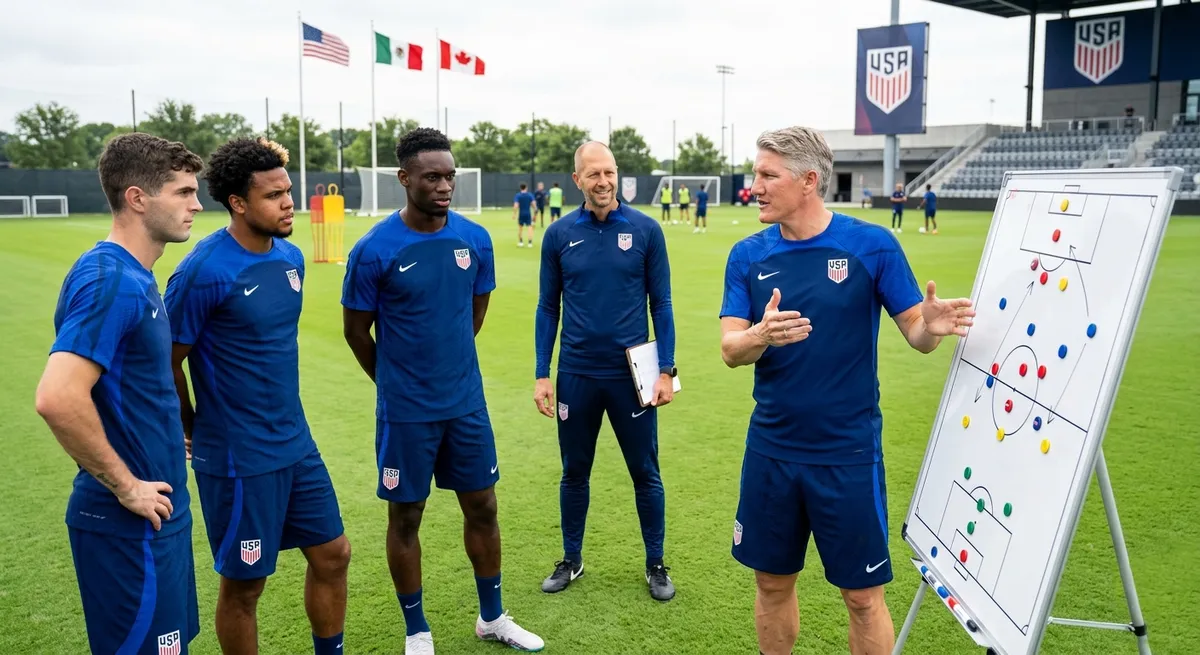
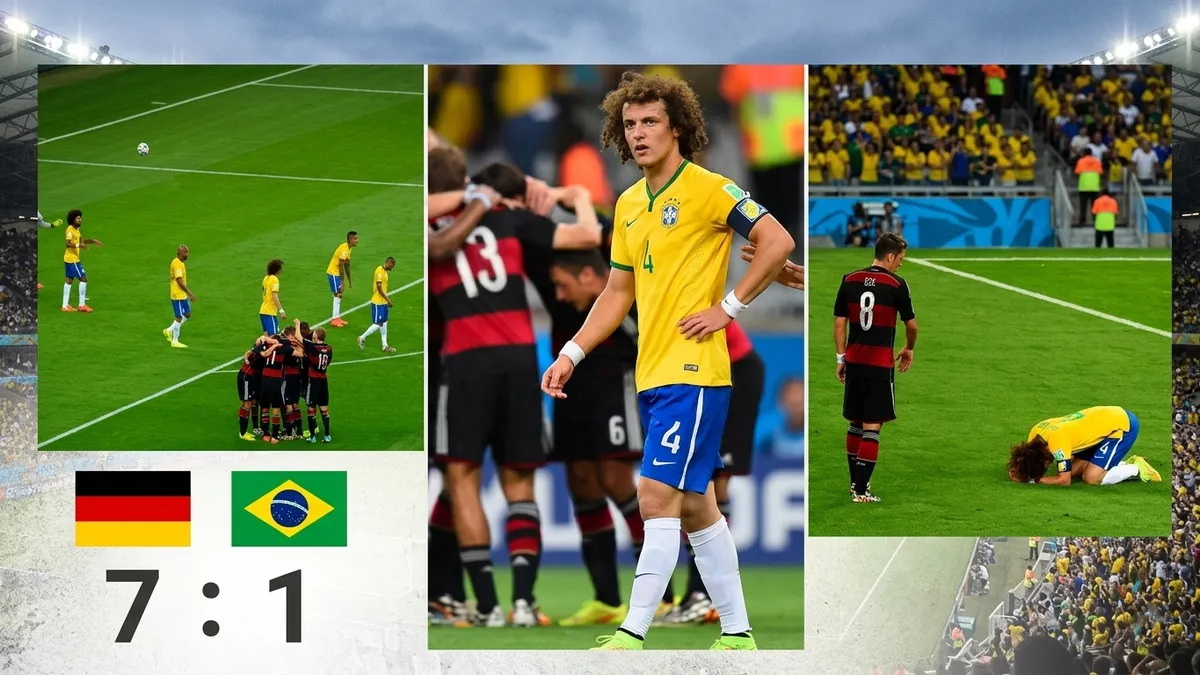
The United States Soccer Federation (US Soccer) confirmed this Thursday the addition of former German player Bastian Schweinsteiger as a tactical advisor to the coaching staff led by Gregg Berhalter. The 2014 World Cup champion in Brazil will take on a consulting role with intermittent presence at training sessions and match analysis, in a move aimed at bolstering the national team's preparation for the 2026 World Cup, which it will co-host with Mexico and Canada.
"He will bring a privileged perspective on positional play, reading of space, and defensive pressure. His experience in elite tournaments is hard to find," Berhalter stated in the official press conference. "This is not a media signing, but adding competitive intelligence that our group needs."
Schweinsteiger, 40, played in three World Cups (2006, 2010, 2014) and captained the Mannschaft to victory at the Maracanã. After retiring in 2019 with the Chicago Fire of MLS, he worked as a commentator and sporadic advisor for Bayern Munich, while also pursuing his coaching license. He now returns to an ecosystem he knows well: he lived in the United States for three seasons.
Schweinsteiger will not be on the bench for the March international friendlies against Jamaica and Switzerland, but he will be present in the April and May microcycles. His work will focus on three specific areas:
Defensive transitions: the tactical axis that most concerns Berhalter. The U.S. showed fragility in the 1-1 draw against Portugal in the last Copa América. Schweinsteiger was a specialist in recovery after losing possession and in covering full-backs.
Reading high-intensity matches: he will share reports on European rivals (England, Netherlands) and South American rivals (Brazil, Argentina) based on his direct experience in World Cup qualifiers.
Mentoring of the defensive midfield: young Johnny Cardoso and Weston McKennie will receive personalized guidance on positioning and pressing timing.
"It's not about imposing a German system, but about translating universal concepts to the reality of the American player. Football is a language, but the accent must adapt," the German said in a statement released by US Soccer.
The context: a World Cup with maximum pressure
The United States enters 2026 as host and with the obligation to get past the round of 16 for the first time since 2002. The generation of Christian Pulisic, Gio Reyna, Tim Ream, and Matt Turner combines youth and experience, but lacks a pedigree of championships in tough qualifiers. Schweinsteiger, who played 121 matches for Germany, offers exactly that experience that is not taught in manuals.
"When I arrived in Chicago, I saw that the physical talent is enormous, but there is a deficit in decision-making under stress. In a World Cup, a second of hesitation costs you the match. That's where Bastian can help," Berhalter added.
The Federation has not detailed the contract length, although internal sources point to an agreement until December 2026. Schweinsteiger will combine this role with his work as a global ambassador for the Laureus Foundation and his participation in the UEFA Champions League advisory board.
A champion who already knows MLS
The choice of Schweinsteiger is no coincidence. His stint with Chicago Fire (2017-2019) allowed him to understand the peculiarities of the local ecosystem: long travels, artificial turf fields, congested calendar, and a football culture that prioritizes attack over defensive organization. "He was a player who would have coffee with the youngsters after training. That humanity is key when you have to correct players who haven't experienced a World Cup semifinal," recalled Veljko Paunovic, former Fire coach who worked with the German.
On the purely tactical side, Schweinsteiger stood out during his career for his ability to interpret the game from the base of the diamond. In the German national team under Joachim Löw, he was the link between defense and attack, with freedom to break lines through dribbles or through balls. Just the profile the U.S. needs to connect with its center forward—Folarin Balogun is expected to be the reference—without losing defensive solidity.
Reactions in the locker room
Defender Antonee Robinson celebrated the arrival of the German in an interview with the national team's official channel: "It's an honor to have someone who has lifted the World Cup. Not only for what he knows, but for how he communicates it. In the videos he has sent us, we have already detected small adjustments in how to close the space between center-back and full-back."
McKennie, for his part, highlighted the motivational component: "When he talks about the 115th minute against Argentina in the 2014 final, you feel like you're there. That's not found in Opta data."
US Soccer's bet is risky but calculated. Schweinsteiger has no experience as a head coach of a national team, but his analytical ability and influence over players make him a game-changing factor for a team looking to break its historical ceiling. The first test will come in June at the Gold Cup, where the U.S. will defend the title against rivals like Mexico and Canada.
"If we can get every player to understand the 'why' behind every movement, we will have taken a huge step," Schweinsteiger concluded. "The World Cup is not won just by running; it is won with head and heart synchronized."