Journalists in venues: record coverage at 2026 World Cup
June 21, 2026 4 min readPrediPick
Largest media coverage in history expected
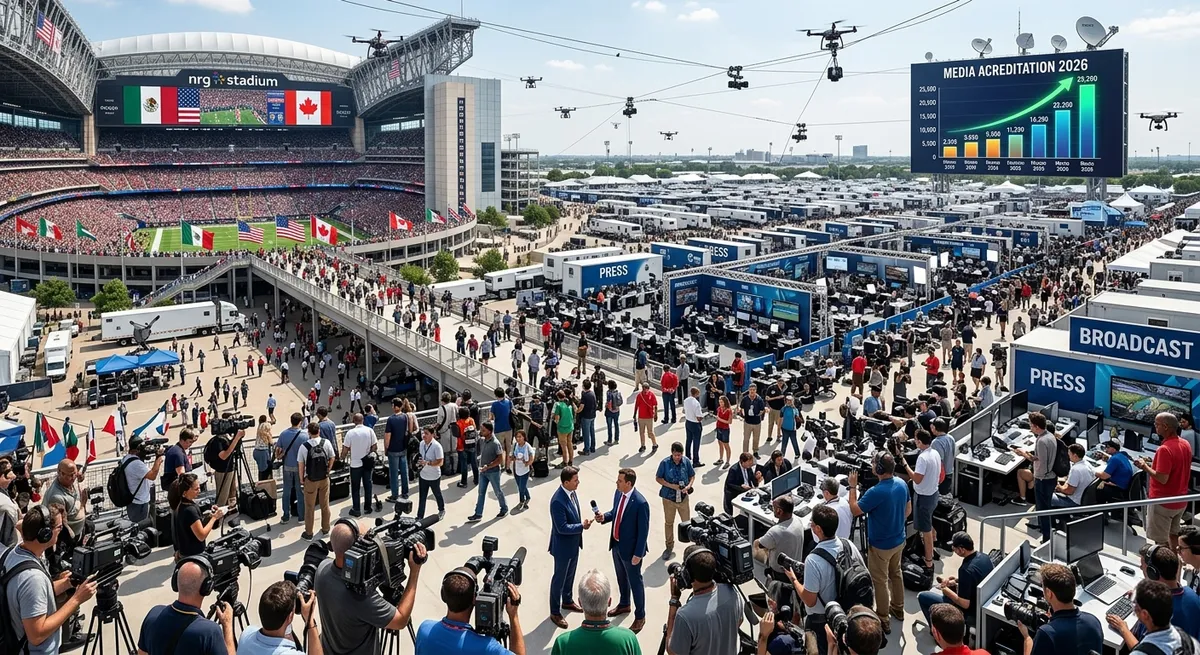
More than 25,000 journalists and media technicians are stationed across the 16 official venues of the 2026 FIFA World Cup, which for the first time will be played in three countries: Mexico, the United States, and Canada. The figure, confirmed by the Joint Organizing Committee, exceeds the previous record set in Qatar 2022 by 15% and doubles the accreditation numbers from Russia 2018. According to FIFA projections, global media coverage is expected to reach a cumulative audience of over 7 billion people.
The staggered arrival of communication professionals began in early May, with infrastructure and production teams setting up temporary press centers across different time zones. A total of three International Broadcast Centers (IBC) will be enabled: one in Mexico City, another in Dallas, and a third in Vancouver. Each IBC will have capacity to house more than 8,000 workers and will be interconnected by a 40,000-kilometer fiber optic network.
“It’s the first time a World Cup spans more than one territory, and with that the logistical complexity for the media multiplies. We are seeing a demand for accreditations never seen before, especially from digital networks and streaming platforms,” said Jean-Claude Perron, FIFA Director of Communications, during a virtual conference held this week.
Comparison with previous tournaments
Edition
Accredited journalists
Host countries
Estimated broadcast hours
Russia 2018
18,500
1
120,000
Qatar 2022
21,700
1
150,000
World Cup 2026
25,200 (projected)
3
210,000 (estimated)
The explosion of digital coverage has been key. During Qatar 2022, 12 billion interactions were generated on social media; for 2026, growth of at least 40% is anticipated, driven by vertical content, augmented reality, and simultaneous broadcasts in multiple languages. FIFA has hired Meta and Google as technology partners to ensure real-time delivery of highlights and advanced statistics.
Statements from the venues
At the Estadio Azteca, one of the most iconic venues, 24 additional press booths have been installed for international media. María Teresa Rojas, head of press for the Mexican Organizing Committee, noted:
“We are prepared and have doubled the capacity of workrooms and established a system of simultaneous translation in eight languages for press conferences.”
In California, the SoFi Stadium in Los Angeles will be the epicenter of coverage on the West Coast. There, the NFL has lent its state-of-the-art sports production infrastructure. David Chen, executive producer at FOX Sports, stated:
“We have never had such a large production window for a sporting event. We will have more than 300 cameras at each game, including drones and robotic angles. The broadcast quality will be comparable to a high-budget film.”
The challenge of distributed coverage
Unlike previous tournaments concentrated in a single country, World Cup 2026 forces media teams to travel up to 3,000 kilometers between venues. Major networks have deployed mobile fleets of satellite units and decentralized teams. The Associated Press has announced it will deploy 150 journalists spread across 10 regional hubs, while BBC Sport is investing in portable studios that will be set up at all 16 venues during the 48 hours before each match.
FIFA has created an interactive map of media resources accessible to accredited personnel, showing real-time availability of air traffic, hotels, and workrooms. It is estimated that only on domestic flights, journalists will make more than 55,000 trips during the tournament.
An evolving media ecosystem
Coverage of the 2026 World Cup will mark a before and after not only because of the number of journalists, but because of the profile of the represented media. For the first time, 40% of accreditations correspond to native digital platforms, such as DAZN, Twitch, or YouTube, and to sports influencers who will broadcast exclusive content from the stands.
“Sports journalism is no longer just about newspapers or television. Content creators are fundamental players in this coverage. FIFA has had to adjust its access protocols to include streamers and podcasters with audiences in the millions,” explained Laura Klein, sports media analyst at the University of Texas.
Security and image rights challenges
With a mobilization of more than 25,000 people, the security committees of the three countries have coordinated a unified surveillance plan. Biometric checkpoints will be installed at all entrances to stadiums and press centers. Additionally, FIFA has tightened penalties for those who violate broadcast rights regulations, a sensitive point in a tournament with multi-platform coverage.
Looking to the future
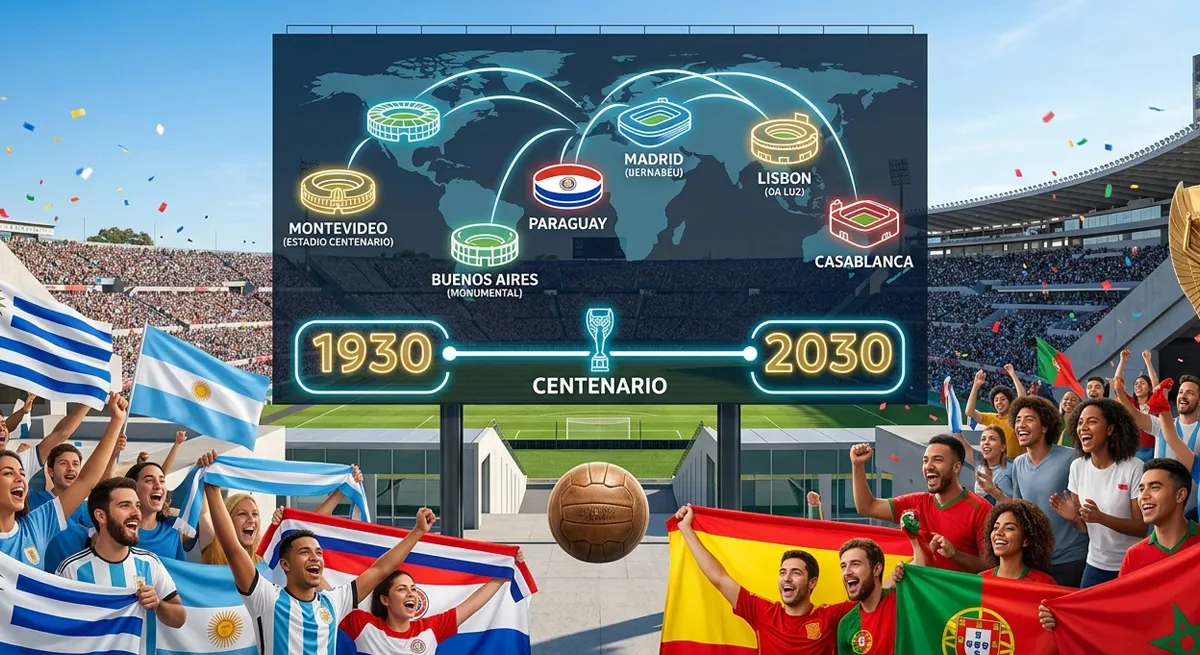
The 2026 World Cup represents the culmination of a process of informational globalization that began in 1998, when just over 12,000 journalists were accredited in France. The current figure has doubled in 28 years, and everything indicates that for 2030 (World Cup in Morocco, Spain, and Portugal) the number could exceed 30,000 accredited personnel.
Journalists are already at the venues. Temporary newsrooms are beginning to come to life. The greatest show on earth is about to be told by the largest media machine ever assembled. And the ball hasn't even started rolling yet.