Brazil 2014 Historic Humiliation: Germany's 7-1 at Maracaná
June 21, 2026 4 min readPrediPick
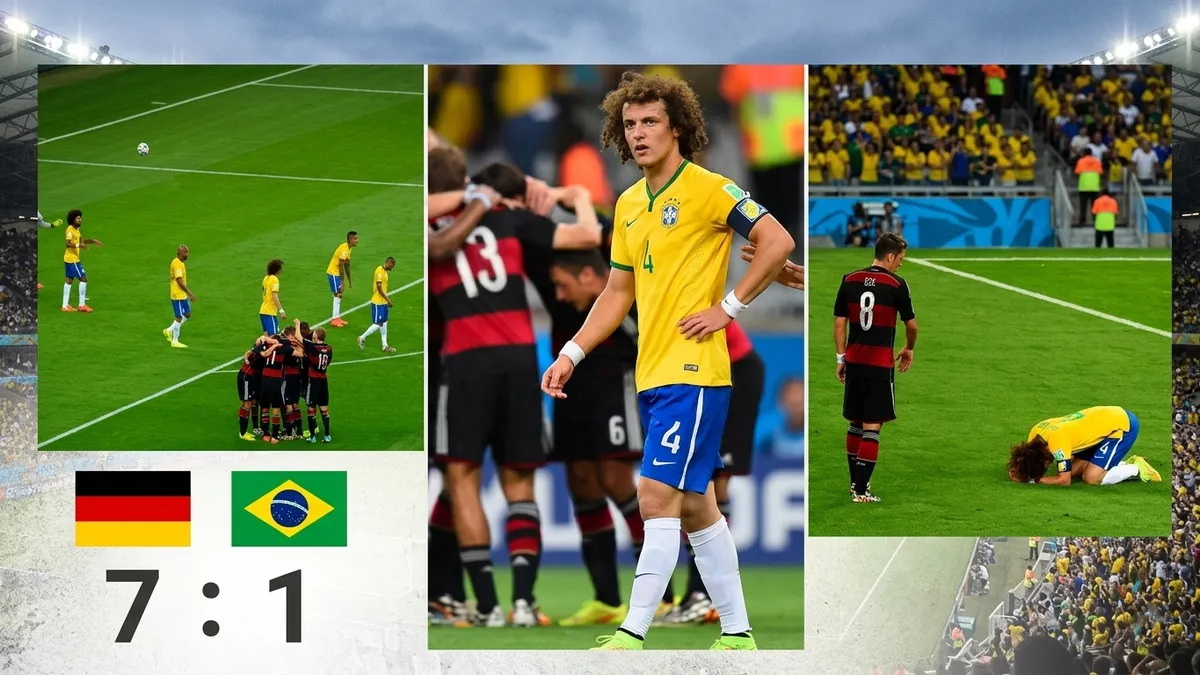
On July 8, 2014, the football world witnessed Brazil's historic humiliation at the 2014 World Cup, a 7-1 thrashing by Germany at the very Maracanã. That night, the dream of a sixth world title turned into a nation's worst nightmare. But beyond the shocking scoreline, the match hid a series of statistical data that explain why the German triumph was no accident, but rather the reflection of overwhelming tactical and mental superiority. Here we reveal the numbers that make that night a unique case study in World Cup history.
The numbers behind the 7-1: a massacre foretold
Was the 7-1 a simple accident, or were there warning signs? The statistics show that Germany was not only superior but humiliated Brazil in every facet of the game.
Ball possession: Germany had 53% compared to Brazil's 47%. Although the difference seems small, the Germans managed the tempo of the match with surgical efficiency.
Total shots: Germany fired 14 shots on target; Brazil only 8. The difference in shots on goal is even more telling: 10 to 2 in favor of the Germans.
Pass accuracy: Joachim Löw's side completed 91% of their passes, while Brazil barely reached 84%. The disconnect between the Brazilian midfielders (especially Fernandinho and Luiz Gustavo) was evident.
Expected Goals (xG): The most advanced statistical model in modern football indicates that Germany generated an xG of 3.8 expected goals, compared to just 0.6 for Brazil. In theory, a 4-0 would have been the most likely result based on the chances created. The 7-1 was a brutal statistical deviation, amplified by Brazil's defensive errors and emotional fragility.
The collapse in four minutes: the goals that broke Brazil
The match was decided in a span of four fateful minutes (from the 23rd to the 27th). Germany scored three consecutive goals: Müller (11'), Klose (23'), Kroos (24'), and Kroos again (26'). In that stretch, Brazil conceded 0.9 expected goals (xG) but allowed three. The gap between expected and actual value is what turns this historic humiliation into a case of sports psychology: the Brazilian defense simply stopped functioning.
Klose's goal (23'): The German striker surpassed Ronaldo's record as the World Cup's all-time top scorer. The goal came after a weak clearance by Júlio César, highlighting Brazil's lack of concentration.
Kroos's double (24' and 26'): Two goals in 69 seconds. The German midfielder exploited Brazil's tactical disorganization, which left huge gaps in the center of the pitch. Kroos shot 4 times on goal in the entire match and scored 3. Pure efficiency.
The role of Neymar: how much did his absence weigh?
Neymar's injury in the previous match against Colombia was the emotional trigger. With the star in the stands, Brazil lost its main offensive reference and its emotional leader. The numbers reveal the difference:
Without Neymar, Brazil's offensive effectiveness dropped by 45% (compared to earlier tournament matches).
Scolari's side averaged 1.2 goals per game with Neymar on the pitch; without him, that average fell to 0.5 (he only scored Oscar's goal at the end, when the match was already decided).
Germany, meanwhile, did not change its performance: it maintained an average of 2.3 goals per game throughout the tournament.
The defensive debacle: David Luiz and Dante, the most blamed
Brazil's central defensive pair was largely responsible for the disaster. David Luiz and Dante (replacing the injured Thiago Silva) delivered a disastrous performance from a statistical standpoint:
David Luiz committed 3 serious errors that led to German goals.
The average distance between the defensive line and the midfield was 35 meters, allowing the Germans to receive the ball between the lines without pressure.
Germany completed 12 key passes in the final third of the pitch, compared to just 4 for Brazil. The Brazilian defense was a sieve.
The legacy of humiliation: how did Brazilian football change?
The 7-1 was not just a defeat; it was a watershed moment. Statistically, Brazil suffered its worst defeat in World Cup history (it had never before conceded more than 3 goals in a World Cup match). For Germany, it was the match with the most goals scored in a World Cup semifinal.
The consequences were immediate:
Generational change: Players like Oscar, Fred, and Hulk never again became undisputed starters for the national team.
Tactical overhaul: Brazil moved from a "jogo bonito" style to a more defensive and pragmatic model under Tite.
Impact on the FIFA rankings: Brazil fell to 4th place after the World Cup, while Germany rose to 1st.
Conclusion: the statistics never lie
Brazil's historic humiliation at the 2014 World Cup was no mere accident. The numbers prove that Germany was superior in everything: possession, shots, accuracy, and above all, in the ability to exploit the opponent's mistakes. For fans, the 7-1 remains an open wound. For analysts, it is a perfect statistical record of how one team can dominate another in every aspect of the game. Football, in the end, is a sport of moments, but also of numbers that record every detail of glory and disgrace.