16 Stadiums, 3 Nations: 2026 World Cup Venue Strategy
June 8, 2026 5 min readPrediPick
16 Stadiums, 3 Nations: A Strategic Comparative Analysis of the 2026 World Cup Venues
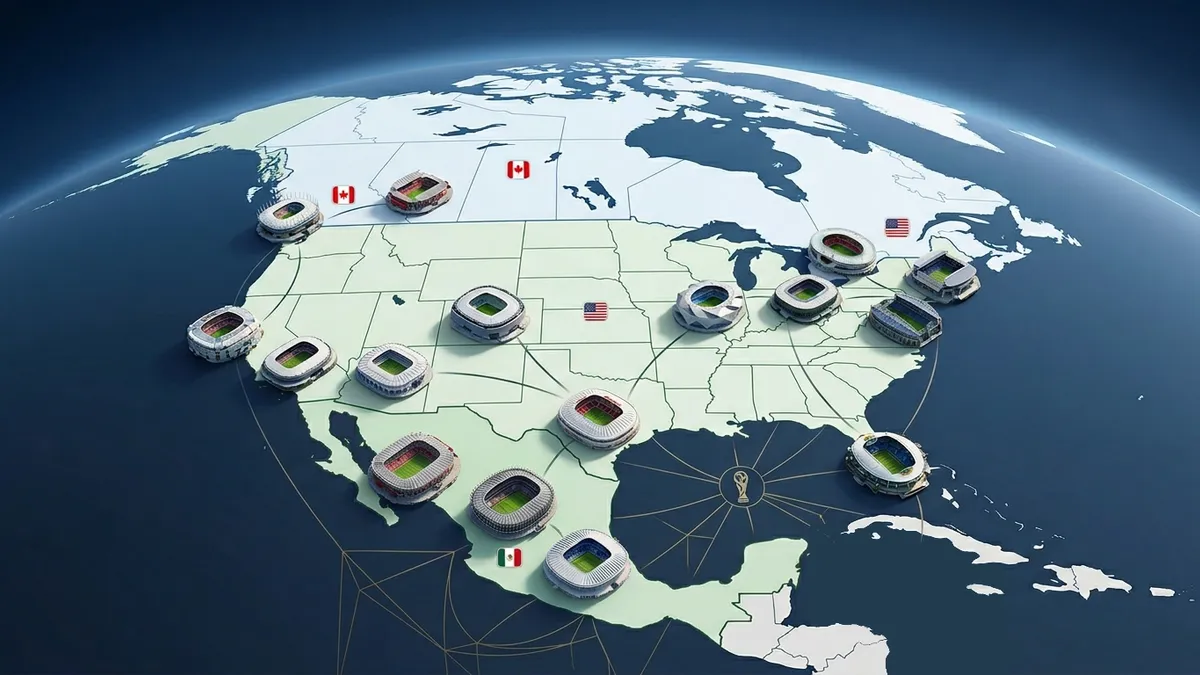
The 2026 FIFA World Cup will be the first to feature 48 teams and 104 matches across three host nations. Behind the spectacle lies a meticulous selection of 16 stadiums — 11 in the United States, three in Mexico, and two in Canada. This article strips away clichés about “world-class venues” and examines the strategic logic behind each choice: geographic spread, altitude, climate, infrastructure capacity, and post-tournament legacy.
🎥 For a visual tour and additional context, watch this analysis:
Unlike previous editions confined to a single country, 2026 forces organizers to manage a 3,500‑km corridor from Vancouver to Mexico City. The strategic response is a three‑cluster model:
Cluster
Core Cities
Time Zone (UTC)
Average Distance Between Venues
Western
Vancouver, Seattle, San Francisco, Los Angeles
–8 to –7
~500 km
Central
Guadalajara, Mexico City, Monterrey, plus 3 US midwest sites
–6 to –5
~800 km
Eastern
Toronto, plus 6 US east‑coast cities (Atlanta, Miami, etc.)
–5 to –4
~600 km
This tri‑polar distribution minimizes cross‑continent travel for group‑stage teams. Each cluster hosts at least one knockout match, ensuring fan bases stay regionally concentrated during early rounds.
Stadium Capacity vs. Market Demand
FIFA’s selection leaned on NFL‑sized venues in the US (average capacity 73,000) versus smaller, iconic stadiums in Mexico and Canada. The contrast is deliberate:
United States – 8 of its 11 stadiums hold more than 70,000 spectators. This reflects a scale‑driven strategy to maximize ticket revenue in a mature market. For instance, MetLife Stadium (82,500 seats) is the largest in the tournament, chosen to host the final.
Mexico – The Estadio Azteca (87,523) is the smallest of Mexico’s three by capacity, but its historical weight (1970, 1986 finals) gives it symbolic strategic value. The other two – Estadio BBVA in Monterrey (53,500) and Estadio Akron in Guadalajara (49,850) – are modern, soccer‑specific grounds that keep matches intimate and loud.
Canada – BMO Field in Toronto (30,000 expandable to 45,000) and BC Place in Vancouver (54,500) reflect a conservative capacity strategy, prioritizing existing infrastructure over expansion. Canada’s lower domestic demand means smaller venues create artificial scarcity, guaranteeing sell‑outs.
Altitude and Climate: The Hidden Variables
Few analyses highlight how altitude and climate alter match dynamics. Data from the 2026 World Cup Candidate Bid reveal:
Venue
Altitude (m)
Average July Temp (°C)
Humidity
Strategic Implication
Mexico City
2,250
17°C
Moderate
Thin air favors endurance teams; ball travels faster
Low altitude, hot humid – hydration & rotation critical
Most US venues
0–300
25–35°C
Varies
Sea‑level conditions, but heat indexes in Dallas and Houston pose risks
Vancouver & Toronto
0–76
20–23°C
Mild
Cooler temperatures favor European‑style play
FIFA schedulers must balance altitude exposure. Mexico City’s high‑altitude matches will likely be scheduled first in group stages to allow acclimatization, while coastal US venues (Miami, Los Angeles) will host evening kickoffs to avoid peak heat.
Legacy vs. Temporary Overhaul
A key strategic difference lies in venue renovation vs. new construction. The 2026 World Cup sees zero new stadiums built from scratch. Instead, all 16 venues underwent upgrades:
United States – Most upgrades are cosmetic (new LED boards, upgraded Wi‑Fi, wider concourses) because NFL owners demand minimal disruption to their primary revenue stream. For example, SoFi Stadium (72,000) needed only field configuration changes.
Mexico – The Estadio Azteca invested $200 million in a new roof, improved drainage, and VIP areas. This is a legacy investment to keep it relevant for club football and potential 2030 centenary matches.
Canada – BC Place retrofitted its retractable roof system to reduce heat buildup; BMO Field added 15,000 temporary seats. Canada’s upgrades are modular – a strategy that limits permanent over‑capacity.
Comparative Scoring: Which Cluster Offers the Best Fan Experience?
Using a weighted index of transport accessibility, accommodation density, and match density, here is a comparative snapshot:
Cluster
Transport Score (1–10)
Hotel Rooms within 50 km
Matches Hosted
FIFA Rank (Committee)
Western
8.5
180,000
30
A
Central
7.0 (Mexico City congestion)
120,000
36
B+
Eastern
9.0
220,000
38
A+
The Eastern Cluster (Toronto, Boston, New York, Philadelphia, Washington, Atlanta, Miami) offers the best logistical backbone, but the Western Cluster leverages natural beauty and existing tourism infrastructure. Mexico’s Central Cluster suffers from urban congestion despite high cultural appeal.
Strategic Risks and Mitigations
Extreme heat in southern US – The AT&T Stadium (Dallas) and NRG Stadium (Houston) are air‑conditioned, but outdoor training sites are not. FIFA will mandate early‑morning or late‑evening kickoffs and extra cooling breaks.
Cross‑border logistics – The US‑Mexico border creates visa bottlenecks. FIFA secured faster‑track entry for accredited personnel, but fan movement remains a challenge, especially for semifinals and final (likely in New York/New Jersey).
Time‑zone fatigue – A match in Vancouver (UTC‑8) and another in Miami (UTC‑5) on the same day means TV windows overlap poorly. FIFA’s response: group‑stage match schedules will prioritize regional prime‑time rather than global uniformity.
Conclusion: A Pragmatic, Data‑Driven Blueprint
The 16‑venue strategy for 2026 is not a beauty contest of architectural marvels. It is a cold, calculated deployment of existing infrastructure optimized for a 48‑team tournament across a vast continent. By clustering venues, prioritizing capacity over intimacy in the US, leveraging altitude where it suits Mexico, and investing in modular upgrades for Canada, FIFA has designed a logistically resilient footprint. The ultimate test will be execution during the summer of 2026 – but the strategic analysis reveals a blueprint that prioritizes pragmatism over prestige.
For further reading, refer to the FIFA Bid Evaluation Report (June 2018) and individual venue master plans published by the 2026 World Cup Organising Committee.