#Vozinha goalkeeper Cape Verde#Cape Verde vs Spain World Cup 2026#who is Vozinha#40-year-old goalkeeper World Cup#viral sensation World Cup 2026#story of goalkeeper Vozinha
Vozinha: The 40-year-old keeper who stopped Spain and conquered the world in 24 hours
June 17, 2026 7 min readPrediPick
Vozinha: The 40-year-old keeper who stopped Spain and conquered the world in 24 hours
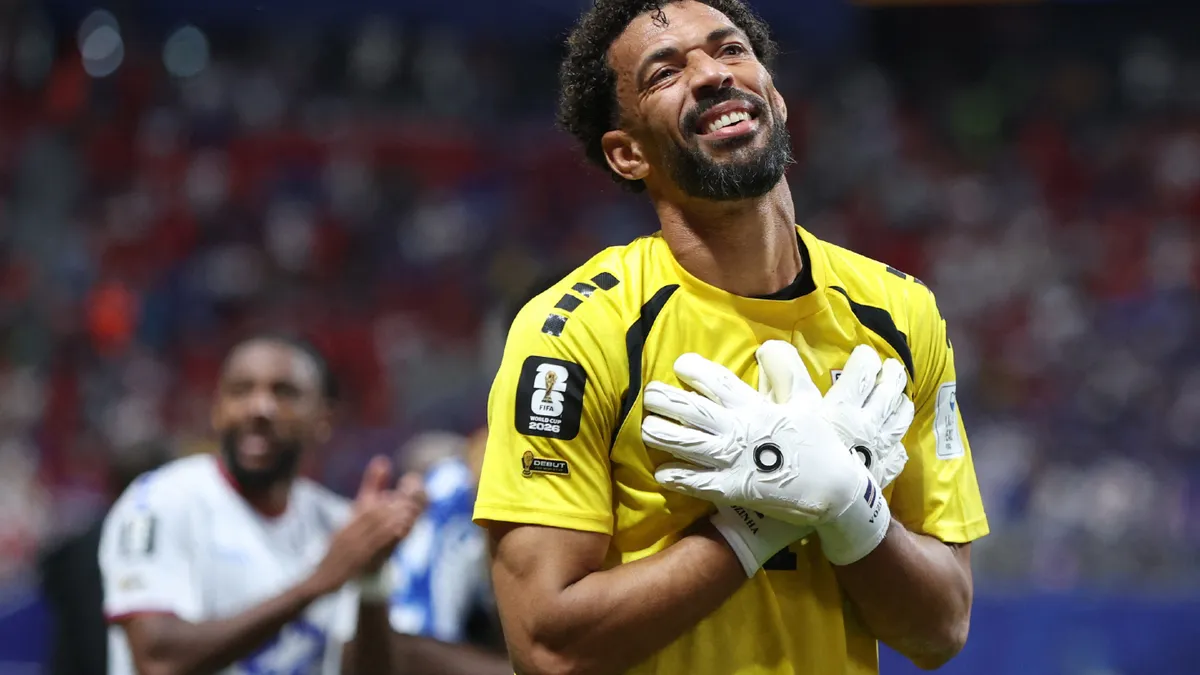
Spain had 27 shots. Seven on target. A goal that seemed destined to fall. And a 40-year-old man, with graying hair and gloves worn out by two decades of football on four continents, who refused again and again to be beaten. When the final whistle blew for the 0-0 draw between Cape Verde and Spain in Atlanta, Josimar José Évora Dias—known worldwide as Vozinha—collapsed to the ground and cried. He wasn't crying because of the result. He was crying for everything it had taken to get there.
In 90 minutes, Vozinha went from being a nearly unknown goalkeeper in Portugal's second division to the most talked-about figure of the 2026 World Cup. And the world, without planning it, surrendered at his feet.
From Mindelo to the world: a career built on resilience
Josimar José Évora Dias was born on June 3, 1986, in Mindelo, on the island of São Vicente, Cape Verde. An archipelago of 600,000 inhabitants in the Atlantic, better known for its music than its football, which on June 15, 2026, became the protagonist of the most-watched tournament on the planet.
The name itself has a story. His parents, football fanatics, wanted to call him Valdano, after the Real Madrid star who had scored in the 1986 World Cup in Mexico just days before his birth. Cape Verdean authorities blocked it, so they went with Josimar, after the Brazilian full-back from that same Cup.
And the nickname, Vozinha, came later. His grandparents raised him from a young age—his father was in the army and his mother always had to work to make a living—and the nickname stuck with him throughout a career that would take him to clubs in Angola, Moldova, Cyprus, Slovakia, and Portugal.
A journey with no shortcuts
Vozinha made his debut with Batuque FC in his home country in 2007. Then he moved abroad, first to Angola with Progresso do Sambizanga, and then to European football: Moldova, Cyprus, Slovakia, Portugal. Four continents, more than ten clubs, always as a free agent, always building from scratch.
His transfer history tells the story better than any narrative: Batuque, Mindelense, Progresso, Zimbru in Moldova, Gil Vicente in Portugal, AEL Limassol in Cyprus, Trencin in Slovakia, and finally Chaves in the Portuguese second division, where he arrived as a free agent in July 2024.
He never played for a big club. He never had a million-dollar contract. His market value, according to records, is estimated at 48,000 euros. Forty-eight thousand euros, while the forwards who tried to beat him on Sunday have contracts worth tens of millions.
But Vozinha kept going. He always kept going.
The Atlanta night: seven saves that changed everything
On paper, the match against Spain held no mystery. Cape Verde was making its World Cup debut. Spain arrived as Euro 2024 champions, with Yamal, Pedri, and Morata up front, one of the two or three most complete teams in the tournament. Bookmakers gave Spain an implied win probability of 92%.
What happened at Mercedes-Benz Stadium in Atlanta is already one of the tournament's defining images.
Vozinha was outstanding, repeatedly frustrating a Spanish attack that generated 27 shots, seven on target, with an expected goals margin of 2.29. Spain crossed into the box, Ferran Torres hit the crossbar, and as the ball fell into a scramble in front of goal, Vozinha leapt up and tipped Mikel Oyarzabal's subsequent shot over the bar with his fingertips.
His seven saves were the second-most made by a goalkeeper aged 40 or older in a single World Cup match since 1966. A record no one expected to need to calculate that Monday.
When the final whistle blew, he collapsed. His eyes were still red when he arrived at the post-match press conference, clutching his Man of the Match award. He explained that he cried for his grandparents, who raised him and were not alive to see that moment, and for his mother, who could not attend because visa fees proved too expensive to arrange in time.
Cape Verde's coach summed it up in a single phrase: his tears were "a cry of resilience."
From 50,000 to 10 million: the phenomenon no one calculated
While Vozinha was stopping shots in Atlanta, a parallel phenomenon was unfolding on social media that he wasn't even looking at in the moment.
Before the match against Spain, Vozinha had fewer than 50,000 followers on Instagram. Less than 24 hours after his performance, that number had soared to 8.1 million. Some more recent figures put it already above 10 million, with expectations that it will soon surpass 10 million.
The trigger had a name: during the match broadcast, Brazilian journalist Casimiro from CazéTV—the platform that broadcasts the World Cup in Brazil to tens of millions of viewers—urged his followers to go follow Vozinha on Instagram. The effect was immediate.
The goalkeeper learned about this unexpected fame right on the pitch, just after the final whistle, during an interview with a Brazilian reporter. The journalist approached and showed him her phone screen to show what was happening. Vozinha's reaction—disbelief, astonishment, an irrepressible smile—went viral just as much as his saves.
In less than 24 hours, Vozinha had surpassed the follower counts of most of the Spanish players he had stopped. Only four players from La Roja have more followers than him.
What he said about all this
On the Men in Blazers podcast, Vozinha said the follower increase "was unexpected," and that his goal, beyond his social media success, is that "hopefully children in my country will want to be like him."
Forty years old. Portugal's second division. First World Cup of his life. And thinking about the kids in Cape Verde watching him on TV.
More than a game: the lesson Vozinha leaves behind
There is something in Vozinha's story that transcends football, and it's worth noting.
It is not a prodigy's story. Not a player discovered at 18, signed by a giant, and consecrated at 25. It is exactly the opposite: the story of a goalkeeper who spent two decades playing in leagues no one follows, in countries where the language wasn't his own, earning what he could, always second or third in line. Someone the world ignored and who, nonetheless, never stopped showing up to training.
Success, when it came, came at age 40. With graying hair. In his first World Cup match. Against the European champions.
That does not happen by accident. It happens because there are people who decide they will keep going, even when no one is watching. And in football, as in almost anything else, that silent decision is often what separates those who give up from those who one day lift their heads and find the whole world watching them.
Cape Verde plays Uruguay on June 21. Vozinha will be there, gloves on.
5 fast facts about Vozinha
Born June 3, 1986, in Mindelo, Cape Verde, making him one of the oldest players in the tournament, having just turned 40 days before the World Cup.
Went from 50,000 to over 7 million Instagram followers in less than 24 hours after his performance against Spain, one of the fastest growths ever recorded in sports.
Has been Cape Verde's starting goalkeeper for 14 years, with over 80 international appearances and four Africa Cup of Nations participations, including the historic 2013 debut where they reached the quarterfinals.
His seven saves against Spain are the second-best performance by a goalkeeper aged 40 or older in World Cup history, since statistical records began in 1966.
His parents wanted to name him Valdano, after the Real Madrid striker who scored at the 1986 World Cup in Mexico—just days before his birth—but Cape Verdean authorities did not allow it.