The role of AI and data analysis in modern football
June 13, 2026 4 min readPrediPick
AI and data analysis: the quiet revolution of the 2026 World Cup
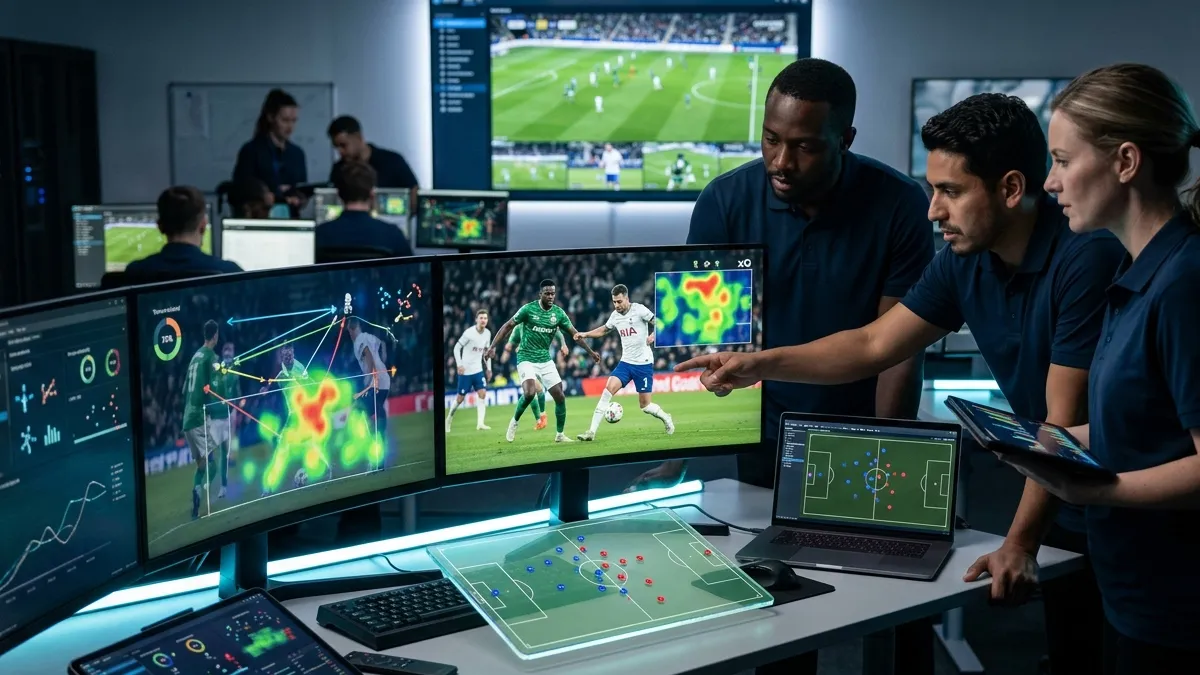
The 2026 World Cup will not only be the first with 48 teams and three host nations (Mexico, the United States, and Canada), but also the most driven by artificial intelligence and data analysis. While in Qatar 2022, 70% of teams used some form of professional data analytics, by 2026 it is expected that 95% of federations will integrate systems based on machine learning and computer vision. This article compares the most disruptive tools, their actual adoption by football powers, and the numbers that are changing scouting, tactics, and injury prevention.
From intuition to data: a historical comparison
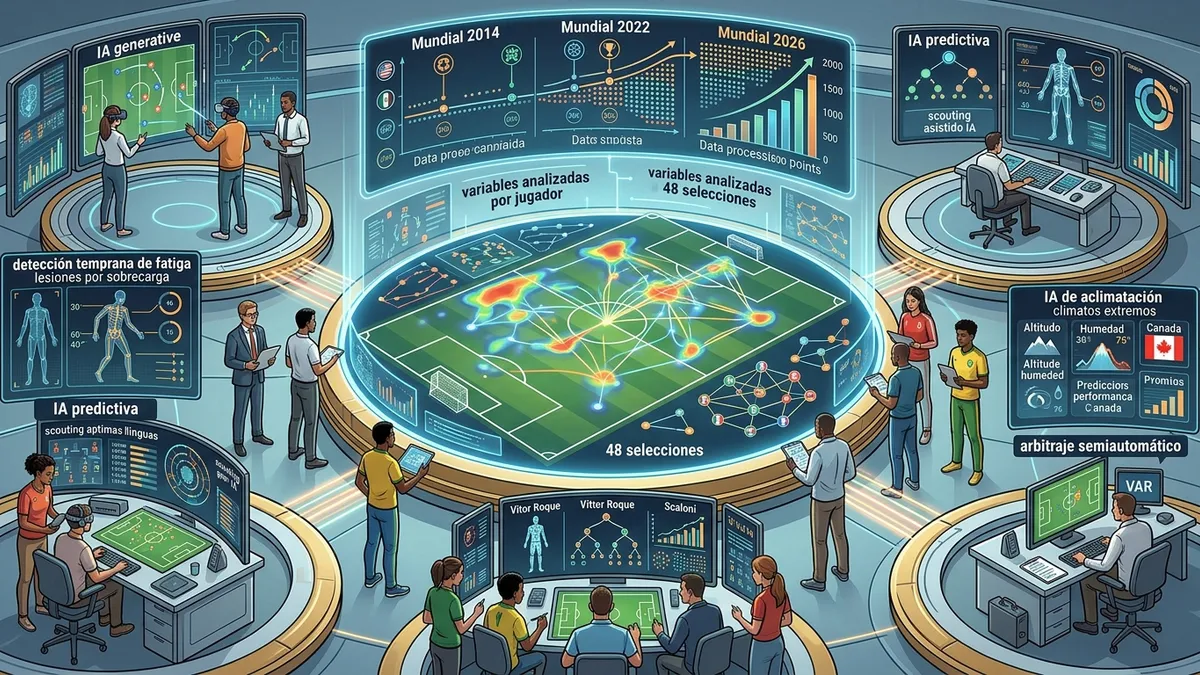
A decade ago, analysis was limited to a handful of statisticians with spreadsheets. Today, and predictive models process up to in real time, according to a study by (2024). The difference is staggering:
Artificial intelligence shortens analysis times and allows coaching staff to focus on decision-making. For example, virtual reality combined with AI (already used by Manchester City and replicated by teams like France) allows for simulating game scenarios in minutes.
Comparison by team: who leads the tech race?
United States vs. Mexico: the North American duel
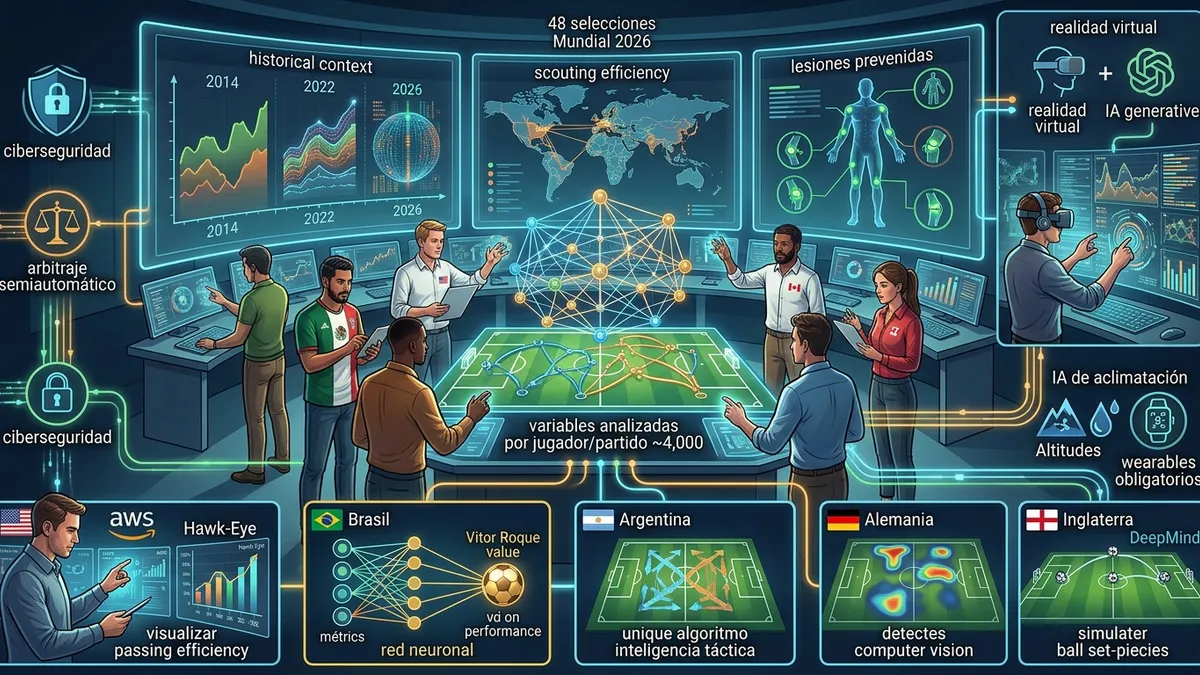
The United States Men's National Team has invested over $15 million since 2022 in an ecosystem based on Hawk-Eye (optical tracking) and AWS (cloud analysis). Its ML model predicts pass efficiency with 87% accuracy, according to federation data. In contrast, Mexico—a historic host—has prioritized Wyscout software and NACOX tools (local AI), but with less deep integration: only 40% of its youth players receive personalized data-based reports.
USA: 12 full-time data analysts, 3 senior data scientists.
Mexico: 5 analysts, 1 data scientist, reliance on external vendors.
Brazil and Argentina: talent boosted by data
Brazil, five-time champion, uses the Olocip system (a Spanish company specializing in market value and performance) to evaluate players from the domestic league with a neural network model. In 2023, their model identified Vitor Roque (now at Barcelona) with 92% accuracy in his expected goals projection. Argentina, current champion, combines StatsBomb with a proprietary algorithm that measures each player's "tactical intelligence." A revealing fact: 60% of Scaloni's tactical substitutions in Qatar 2022 were backed by AI reports.
Brazil: average injury prediction accuracy: 81%.
Argentina: 23% reduction in muscle injuries thanks to AI-powered wearables.
Germany and England: the European data school
Germany has integrated the DFB data field (German Football Association) with SAP and Fraunhofer. Their tactical analysis AI (based on computer vision) detects pressure patterns in midfield with 94% recall. England, on the other hand, uses Google Cloud and DeepMind to simulate set-piece plays; at Euro 2024, 33% of their corner kick goals were designed with the help of generative models.
Quantitative impact: numbers that convince
A meta-analysis by FIFA (published in 2024) on 120 high-level matches reveals:
Teams using predictive AI for lineups improve their possession advantage accuracy by 14%.
Early fatigue detection via computer vision reduces 18% of overload injuries.
AI-assisted scouting increases the success rate of signings by 22% (in top leagues).
In the context of the 2026 World Cup, with venues at different altitudes and climates, acclimatization AI is gaining ground. Canada, for instance, has started training models with historical weather data to predict player performance in extreme conditions (humidity, temperature).
Challenges and criticisms: the other side of data
Not everything is positive. Over-reliance on data can lead to analysis paralysis. A study by the University of Louvain (2023) notes that 30% of coaches feel overwhelmed by the amount of metrics, and 15% ignore AI recommendations. Moreover, the digital divide between rich and poor teams widens: while Top 10 FIFA countries spend an average of $8 million annually on technology, teams like Honduras or Ivory Coast allocate less than $200k.
The immediate future: what we'll see in 2026
AI-assisted referees: the VAR will leap forward with improved semi-automated offside (99.5% accuracy).
Mandatory wearables: 32 of the 48 teams already use them in qualifiers; by the World Cup, they are expected to be standardized.
Conversational AI for journalists: FIFA will test assistants that summarize data in real time for the press.
In conclusion, artificial intelligence will not replace human talent, but it will determine who arrives best prepared for the 2026 World Cup. The teams that balance data, instinct, and adaptation will have a crucial edge in the most globalized and technological tournament in history.