2026 World Cup: How to Predict Results from Scratch

2026 World Cup: How to Predict Results from Scratch
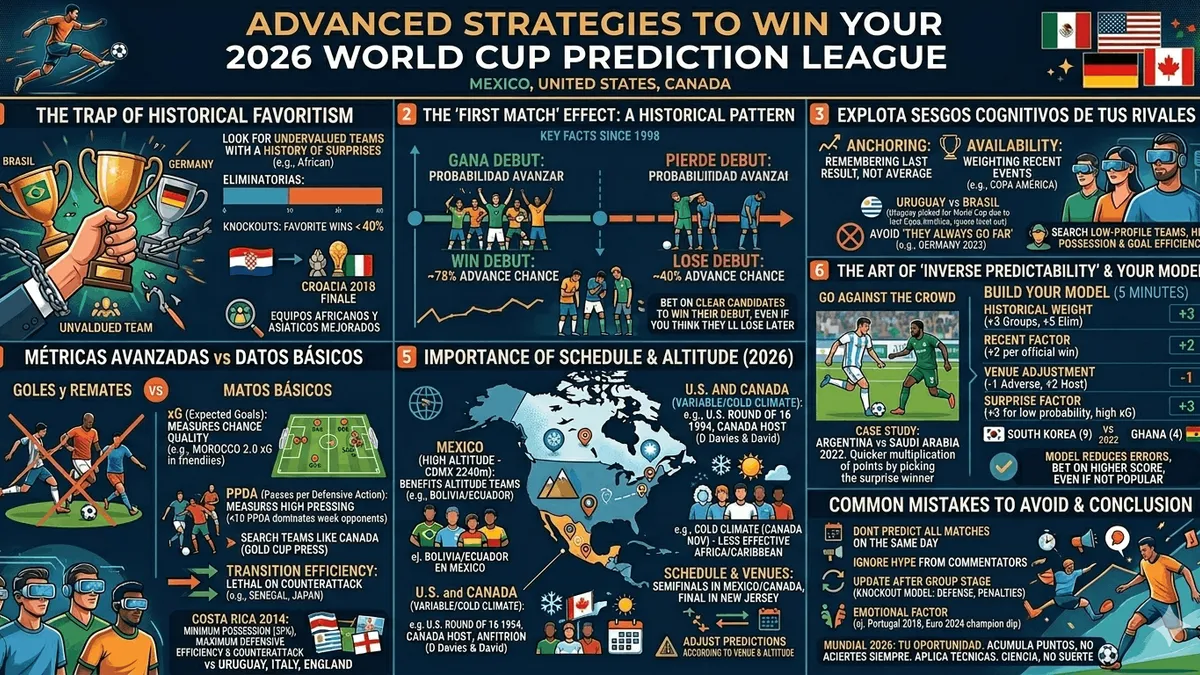
Predicting the outcome of a 2026 World Cup match is not about guesswork or luck. It’s an exercise in tactical analysis and applied statistics that any beginner can learn. With 48 teams, an expanded format, and host nations in Mexico, the United States, and Canada, the factors to consider multiply. This guide offers a concrete method, based on data and modern football concepts, so you can start making informed forecasts from the group stage.
Basic Tactical Concepts for Beginners
Before looking at numbers, understand how teams play. Tactics define the real probabilities of a scoreline. These three pillars are essential:
Formations and Their Impact on Results
The choice of a formation conditions the flow of the match. A 4-3-3 usually prioritizes attack but leaves spaces in transition; a 5-3-2 seeks defensive solidity and counterattacks. To predict, analyze the likely lineup. For example, if a team like Morocco faces Brazil, the probable 5-4-1 of the African side suggests few goals conceded but also low possession. This tilts the forecast toward a tight result (0-0, 1-0, or 1-1) rather than a goal fest.
Transitions and Pressing
Transitions (attack-defense and defense-attack) are the most lethal moments. Teams with fast wingers (like Canada with Alphonso Davies) can create danger even with little possession. Conversely, high-pressing teams (like Germany or Argentina) force errors in the opponent’s half, boosting their xG (expected goals). For a beginner, observing a team’s pressing style (high, medium, or low) helps estimate how many clear chances they will create.
Effective Possession vs. Sterile Possession
Ball possession is not synonymous with dominance. Effective possession (passes in the opponent’s half with intent to progress) is more relevant. Teams like Spain often have high percentages, but if the possession is horizontal, goal threat is low. Conversely, vertical teams like the Netherlands generate more shots with fewer touches. In your predictions, favor teams with high passing density in the final third.
Key Statistics for Match Forecasting
Tactical analysis is reinforced by data. You don’t need to be an expert in machine learning; with three accessible metrics you can refine your forecasts.
Expected Goals (xG)
xG measures the quality of chances created. An xG of 2.0 means a team generated opportunities typical of two goals. Compare a team’s xG for with the opponent’s xG against. For example, if Mexico has an average xG of 1.8 per match and its opponent concedes 1.2, the model suggests a result close to 2-1 (adjusted for home advantage). Look for stats on sites like Opta or FBref; they are free and updated.
Defensive Effectiveness and Goalkeepers
Goals prevented (goals above xG against) reveal decisive goalkeepers. A goalkeeper like Thibaut Courtois can reduce up to 0.5 goals per match. In the World Cup, where margins are narrow, an in-form keeper can change an expected result. Include the starting goalkeeper’s save percentage in your analysis.
Tempo and Cards
Tempo (number of attacks per minute) and cards affect goal totals and match development. High-tempo matches with many fouls tend to have more corners and goals from set pieces. If two teams are aggressive, the total goals (over/under) often exceed expectations.
Contextual Factors: Home Advantage, Weather, and Injuries
The 2026 World Cup will be unique due to its geographic spread. Ignoring context is the most common mistake among beginners.
The Trinational Home Factor
Mexico plays almost as a home team if the venue is Mexico City (altitude 2,240 m). The United States and Canada also enjoy an advantage on their soil. For a forecast, add 0.3 goals to the home team, but adjust for acclimatization. European teams playing at sea level in Miami will suffer less than those facing Mexican altitude.
Last-Minute Injuries and Rotation
In the group stage, managers often rotate to preserve stars. An absence like Lionel Messi for Argentina reduces the team’s xG by roughly 20–30%. Follow pre-match press conferences. If there are doubts about a key starter, the forecast should include greater uncertainty (more probability of a draw or low score).
Weather and Kickoff Time
Matches at noon in extreme heat (e.g., Houston or Guadalajara in summer) affect physical performance. Teams accustomed to temperate climates (e.g., Scandinavian sides) may drop intensity in the second half. In these cases, the over on goals is usually lower, and the result is decided in the first 45 minutes.
Step-by-Step Method for Your First Prediction
Follow this simple routine for each match:
- Identify the likely formation of both teams (check lineups from recent matches).
- Calculate the average xG of each side in their last 5 official matches. Divide total by matches.
- using the same formula. You get a base score (e.g., 1.8 - 1.2 = 0.6 in favor of the first team).
Example: Mexico vs. Germany at the Estadio Azteca. Mexico xG 1.6, Germany xG 1.9. Adjustments: Mexico +0.3 for home; Germany -0.2 for altitude. Estimated score: Mexico 1.9 - Germany 1.7. Likely result: draw (1-1 or 2-1 for Mexico). The market usually favors Germany, indicating a possible home surprise.
Common Mistakes When Predicting Results
- Overrating history: past World Cups don’t reflect current form. Recent form (last 6 months) weighs more.
- Ignoring absences: a last-minute injury can completely change the forecast. Always check the squad list 24 hours before.
- Using only one indicator: combining tactics, stats, and context triples accuracy. Don’t rely on a single metric.
Conclusion: Practice Sharpens the Tactical Eye
Predicting results in the 2026 World Cup is an iterative process. Start with group-stage matches where variables are more manageable. Apply this guide, keep track of your hits and misses, and adjust your model. Over time, you’ll learn to read transitions, pressing, and momentum in real time. The World Cup in North America promises surprises; being tactically prepared will give you a real edge over pure intuition.