World Cup 1962: Garrincha, the Unexpected Hero of Brazil's Back-to-Back Title
When Brazil arrived in Chile to defend the title won in Sweden 1958, few imagined the protagonist would not be Pelé, but a bow-legged winger with impossible dribbling: Garrincha. The 1962 World Cup in Chile was forever etched as the tournament where the "Angel with Bent Legs" ascended to legendary status, guiding the Seleção to their second world championship. This article analyzes, from a tactical perspective, how Garrincha became the unexpected hero of the back-to-back championship and why his performance remains a case study in attacking football.
1962 World Cup: The Tactical Context and Pelé's Absence
The tournament took place amid a tactical transition. Brazil's dominant 4-2-4 from 1958 was beginning to be countered by more compact defensive lines and tighter man-marking. Brazil, led by Aymoré Moreira, arrived as favorites, but a muscle injury to Pelé in the second match—against Czechoslovakia—changed the plans. The young star was sidelined for the rest of the tournament, and the offensive responsibility fell to Garrincha, who had until then been an exceptional supporting player.
Garrincha as a Destabilizing Winger: More Than Dribbles
The Brazilian tactics were adapted to maximize Garrincha's explosive play on the right flank. Moreira freed the winger from defensive duties and instructed midfielders Zagallo and Didí to shift toward his side to provide passing options. The result was a direct and vertical style of play: Garrincha received the ball at the edge of the box, took on his marker—often outnumbered—and delivered crosses or shots.
The numbers back this up: in the four matches he played after Pelé's injury (quarterfinal, semifinal, and final), Garrincha scored 4 goals and provided 3 assists. His average of completed dribbles per match exceeded 10, an extraordinary figure for the era. But most notable was his ability to break defensive lines with changes of pace and feints, forcing defenders into fouls or opening space for teammates.
Garrincha, the Unexpected Hero of the Back-to-Back Championship: Match by Match
Quarterfinal: Brazil 3-1 England
England deployed a 4-3-3 with man-marking on Garrincha, using full-back Jimmy Armfield and midfielder Bryan Douglas. However, the Brazilian's mobility nullified the strategy. In the 31st minute, Garrincha received a long pass from Mauro (the captain and defender), dribbled past two opponents with a scissor feint, and fired a left-footed shot into the top corner. The second goal came from a cross he sent that Vavá tapped into the net. The 3-1 victory confirmed Brazil could win without Pelé.
Semifinal: Brazil 4-2 Chile (the "Battle of Santiago")
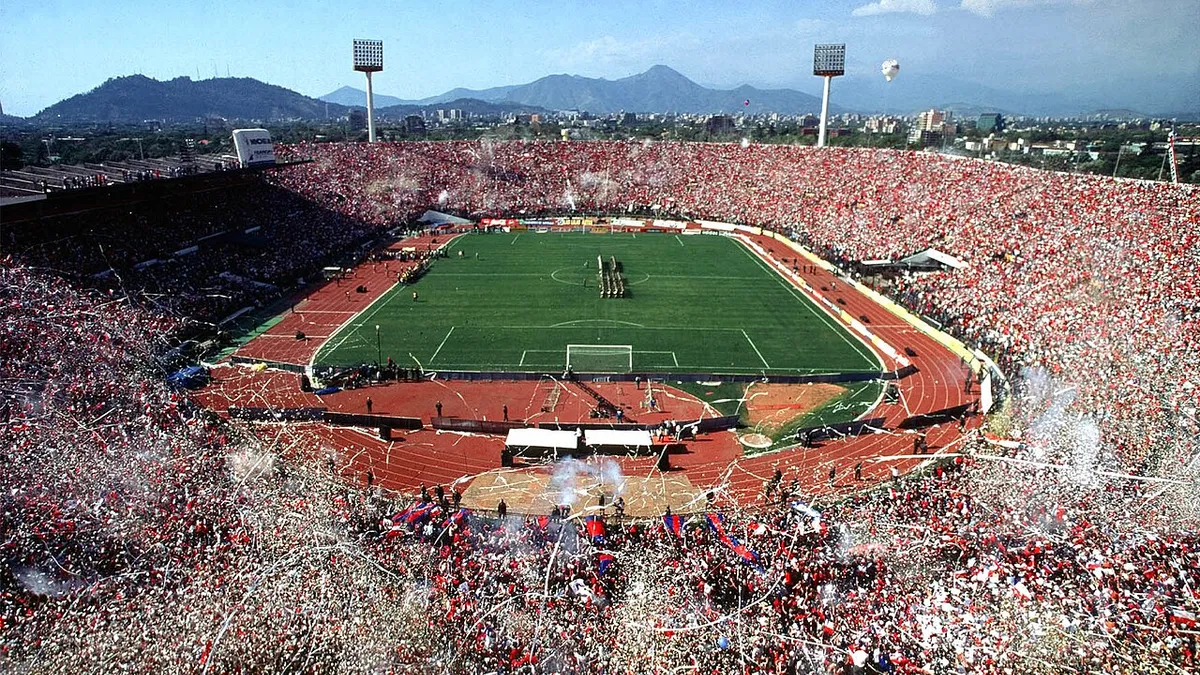
The most memorable match of the tournament. Hosts Chile employed a fierce marking on Garrincha, with hard tackles from Eladio Rojas and Héctor Peralta. But far from being intimidated, the winger responded with a footballing recital. He scored two goals—one a header unusual for his 1.69 m height—and provided the assist for the decisive 4-2. His performance was so dominant that the Chilean crowd ended up applauding him. At the end, Santiago's National Stadium chanted his name.
Final: Brazil 3-1 Czechoslovakia
Czechoslovakia, which had already drawn 0-0 with Brazil in the group stage, tried to neutralize Garrincha with a 3-5-2 that packed the midfield. However, the Garrincha-Zagallo connection on the left (with switches of play) dismantled the scheme. Garrincha assisted Zagallo for the first goal and provoked the penalty that Amarildo converted for the second. Brazil won 3-1 and were crowned back-to-back champions.
The Tactical Innovation Inspired by Garrincha
The 1962 World Cup proved that a pure winger, freed from defensive duties, could be the axis of an attack if the team provided cover. Moreira implemented what we would now call "creative freedom": Garrincha had no fixed position; he could appear on the left or through the center. This confused defenders accustomed to zonal marking and paved the way for future wingers like George Best and Lionel Messi.
Moreover, his unpredictable style—based on improvisation and body mechanics (his bowed legs allowed unique changes of direction)—became an offensive model that broke the tactical conservatism of the era. Coaches began to value verticality and dribbling as a strategic weapon, not just as spectacle.
Garrincha's Legacy in Chilean and Brazilian Football
For Chile, the 1962 World Cup was their best historical performance (third place), and the semifinal against Garrincha remains a lesson in how one player can change a match. For Brazil, Garrincha was not only the unexpected hero of the back-to-back championship but also the symbol that Brazilian football could reinvent itself. Without him, it is likely the back-to-back title would not have been achieved.
Key Stats from the 1962 World Cup
- Garrincha's goals in the tournament: 4 (2 vs Chile, 1 vs England, 1 vs Spain in group stage).
- Assists: 4 (3 in knockout stages, 1 in the final).
- Successful dribbles per match: average of 10.2 (source: historical footage analyzed by RSSSF).
- Fouls suffered: 23 in the last four matches, the highest in the tournament.
Conclusion: Why Remember Garrincha in 1962
The 1962 World Cup not only crowned Brazil as back-to-back champions but elevated Garrincha to the status of an unpredictable genius. His performance showed that individual talent, well channeled within a collective framework, can overcome any tactical plan. For fans and coaches, Garrincha's legacy remains an invaluable reference on how to harness a destabilizing player without limiting him.
If you want to delve into the tactical history of the World Cup, the analysis of this tournament is essential. And if you seek inspiration to maximize a creative winger on your team, study Garrincha's movements in Chile 1962. His football, though from another era, remains relevant today.