Guinness Records in World Cups: A Legacy of Football Greatness
June 26, 2026 6 min readPrediPick
Since its inception, the FIFA World Cup has been much more than a simple competition; it has been a canvas where stories of glory, drama, and above all, a relentless pursuit of excellence are painted. On this global stage, Guinness Records emerge as the ultimate expression of that pursuit, encapsulating moments of football greatness that endure in world football history. These milestones not only celebrate success but also immortalize the indomitable spirit of the athletes and teams who dared to dream big.
What Do Guinness Records Imply in the World Cup Context?
When we talk about in the context of the , we refer to those sporting achievements that have exceeded all expectations, establishing new marks that are globally recognized for their uniqueness and difficulty. It is not just about the or victories, but the way these achievements have challenged the limits of what was believed possible in the beautiful game.
These marks can manifest in various categories, each reflecting a different facet of the competition. For example, there are records that celebrate individual participation in multiple editions of the tournament, highlighting the longevity and consistency of certain footballers. Other records focus on the speed of a goal, demonstrating the ability to make an instant impact in key moments of the match. There are also achievements linked to attendance, which underscore the magnitude and fervor this event generates every four years. The number of goals scored by a player in a single tournament or throughout their World Cup career is another category that captures the imagination of fans, symbolizing unparalleled scoring prowess.
Recognition by Guinness World Records adds a layer of prestige and universal validity to these achievements. It is not just a statistic; it is confirmation that a milestone has been reached, studied, and validated as the best in its class worldwide.
The Enduring Legacy of Marks in Football History
Guinness Records act as pillars that support the rich history of football. They serve as reference points that allow new generations to understand the magnitude of past achievements and the bar of excellence that has been set. Each record is a time capsule, a testament to an era, a style of play, or the emergence of an extraordinary talent that left an indelible mark.
These milestones not only inspire footballers and fans but also enrich the narrative of the sport. They are stories passed down from generation to generation, fueling the debate about who was the best, which team was the most dominant, or what was the most iconic moment. The possibility that a player, a team, or even a fan base can inscribe their name in the book of Guinness Records adds a narrative of mystique to each edition of the tournament, transforming cold statistics into true human epics.
Icons Who Defied History
To grasp the impact of these marks, it is essential to review the names of those men who turned the World Cup into their personal playground, leaving records that today seem simply unattainable.
Pelé: The Eternal King of Goals and Glory
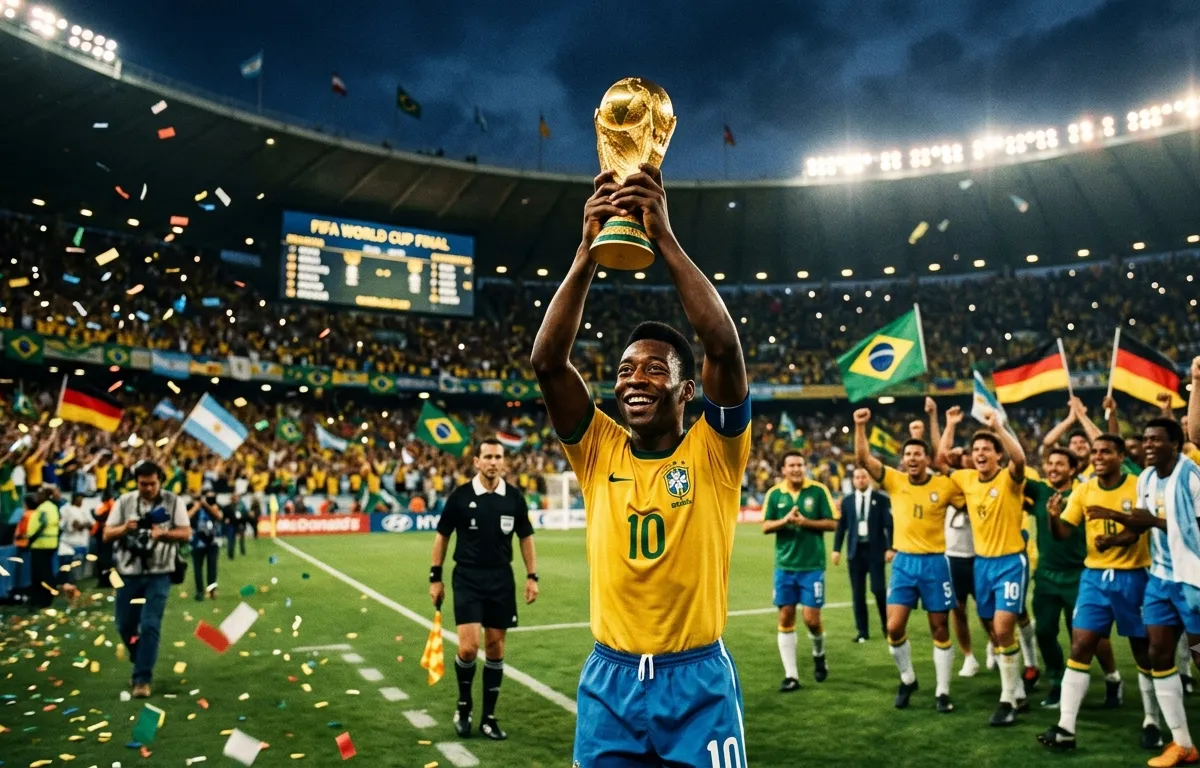
If there is a synonym for precocity and success in World Cup history, it is Edson Arantes do Nascimento, Pelé. The Brazilian star holds, among others, the Guinness Record as the youngest player to win a World Cup, achieving it in Sweden 1958 at just 17 years and 249 days old. But his love affair with the tournament did not end there: he is also the only footballer in history to have lifted three World Cup trophies (1958, 1962, and 1970) as a player, a mark that, more than half a century after his last crown, no one has even managed to equal.
Miroslav Klose: Consistency Turned into Goals
German striker Miroslav Klose etched his name in gold letters at the 2014 Brazil World Cup. By scoring against the hosts in the historic semi-final match, Klose reached the figure of 16 goals in World Cups, surpassing the 15 of the phenomenon Ronaldo. This feat earned him the Guinness Record for the all-time top scorer in World Cup history, a testament to his spectacular ability to be in the right place at the right time over four consecutive editions (2002, 2006, 2010, and 2014).
Hakan Şükür: The Fastest Blink in Football
The surprise factor is part of the World Cup magic, and no one knows this better than the Turk Hakan Şükür. In the third-place match of the 2002 Korea-Japan World Cup against the host nation, South Korea, Şükür took advantage of a defensive error to send the ball into the back of the net just 10.8 seconds after the opening whistle. This lightning goal remains firmly in the Guinness books as the fastest goal in World Cup history.
FIFA Curiosities and Unusual Records
Beyond goals and titles, the record book also houses curious data, longevity marks, and unusual moments that prove the World Cup is a tournament that knows no age or conventional limits.
Essam El-Hadary (Egypt): At Russia 2018, the Egyptian goalkeeper became the oldest player to play in a World Cup match at 45 years and 161 days old. To crown his record, he saved a penalty in that same match against Saudi Arabia.
Lionel Messi (Argentina): The Argentine star not only lifted the trophy in Qatar 2022 but also took the record for most matches played in World Cups (26) and became the only footballer to win the tournament's Golden Ball in two different editions (2014 and 2022).
Carlos Caszely (Chile): Not all records are for celebration. In the 1974 Germany World Cup, the Chilean striker went down in history by receiving the first direct red card in World Cup history, officially inaugurating the card expulsion system that had been implemented in the previous tournament.
The Global Impact of Guinness Validation
The presence of Guinness World Records in the World Cup goes beyond a simple data collection exercise. It acts as the supreme court of sporting memory. When the organization certifies a mark, it elevates the achievement from the realm of local football discussion to the status of world heritage.
This international validation generates a two-way impact:
For the athlete: It transforms a moment of brilliance into a formal distinction they will carry for life, setting them apart from their contemporaries.
For the fan: It offers a clear and objective metric of greatness. Debates about who was the fastest or the most successful are resolved by the rigor of an official seal.
Furthermore, records drive the evolution of the game. Today's athletes not only compete against the opponents they face on the field; they compete against the shadows of the past, knowing exactly what number, what second, or what number of matches they must surpass to achieve immortality.
Conclusion: The Future of Records on the World Stage
Every four years, the FIFA World Cup resets, and with it, the opportunity to rewrite history. Current records are not insurmountable walls but open challenges for the new generations of footballers who grew up admiring Pelé, Klose, or Messi.
Guinness Records in the World Cup are the common thread that connects the romantic past of football with its hyper-competitive present. As long as the ball keeps rolling in the most important tournament on the planet, limits will continue to expand, seconds will become shorter, goal tallies will keep rising, and new names will be inscribed in the golden book of football greatness. Because in the World Cup, glory is eternal, but records are meant to be broken.