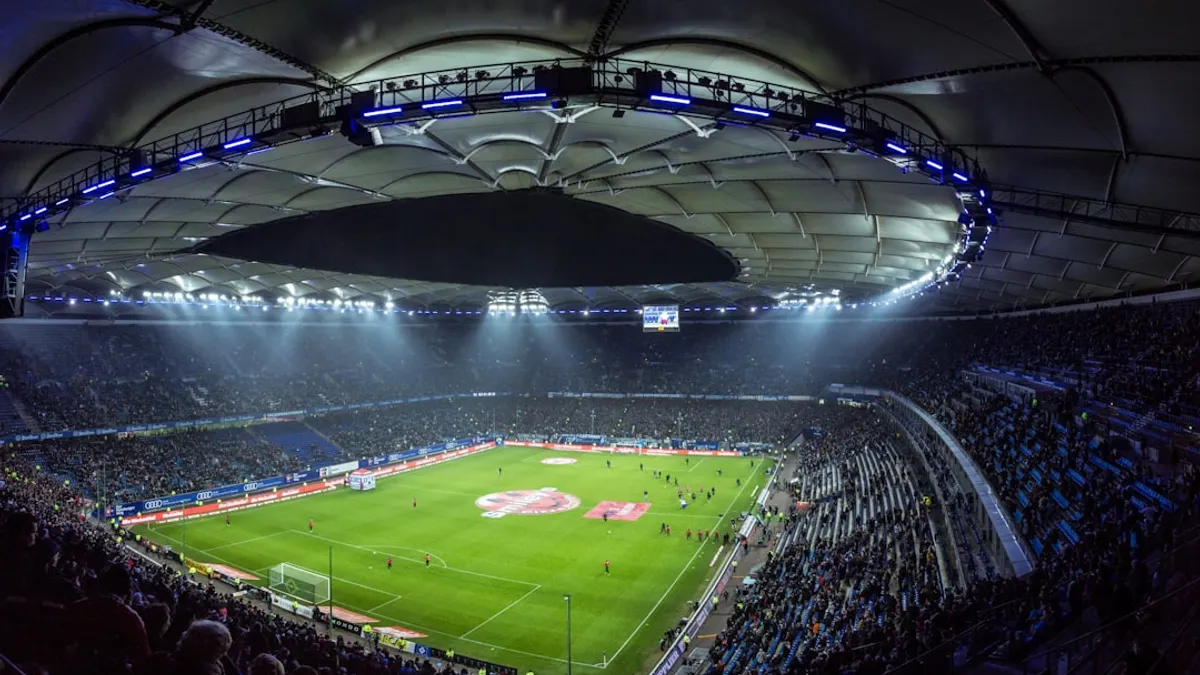
Group StageGroup B Gillette Stadium, Boston
Final Result
 Bosnia and Herzegovina
1-4
 Switzerland
Bosnia y Herzegovina faces a massive challenge against Switzerland in Group B of the 2026 World Cup at Gillette Stadium in Boston. The Dragons are heavy underdogs ranked 72nd in the world, while Switzerland enters as a seasoned tournament team ranked 14th. This match could decide who advances to the knockout stage.
Bosnia y Herzegovina is making a rare World Cup appearance, having qualified through a tense playoff run. Their recent form has been inconsistent, with defensive vulnerabilities exposed against stronger European sides. In Group B, they will need to punch well above their weight to compete with Switzerland and other group favorites. Historically, Bosnia has struggled against disciplined, tactically organized teams, and their only previous World Cup appearance in 2014 ended in group-stage elimination.
Switzerland, by contrast, is a perennial World Cup contender, having reached the round of 16 in three of the last four tournaments. Their recent form is solid, built on a compact defensive structure and efficient counter-attacking play. The Swiss excel in tournament settings, often grinding out results against higher-ranked opposition. This match is critical for them to secure early control of Group B and avoid a tense final group game.
Bosnia y Herzegovina’s greatest strength lies in individual attacking talent, particularly through veteran striker Edin Džeko, who remains a lethal finisher despite his age. The team relies on direct play, long balls, and set-piece situations to create scoring chances. Captain Džeko’s aerial ability and hold-up play can trouble even organized defenses.
Defensively, Bosnia will likely sit deep and look to absorb pressure, hoping to hit Switzerland on the break. Their midfield, led by creative players like Rade Krunić, must be disciplined to prevent Swiss possession from overwhelming them. Recent friendlies have shown they can be dangerous when given space, but their lack of pace at the back is a major concern.
Switzerland is defined by tactical discipline and team cohesion. Their midfield trio, often anchored by Granit Xhaka, controls the tempo and breaks up opposition attacks effectively. The Swiss are patient in possession, waiting for defensive lapses to exploit with quick vertical passes.
Their defensive organization is world-class, with a backline that rarely makes individual errors. Goalkeeper Yann Sommer provides reliability in goal. In attack, Breel Embolo offers pace and physicality, while Xherdan Shaqiri can unlock defenses with set pieces and long-range shots. Switzerland’s experience in high-pressure tournament matches gives them a clear psychological edge.
- Can Bosnia’s defense handle Switzerland’s patient buildup and counter-attacking speed?
- Edin Džeko’s aerial duels against Swiss center-backs will be a key battle.
- Switzerland’s midfield control, especially Granit Xhaka’s distribution, could suffocate Bosnia’s creativity.
- Set pieces: Bosnia may rely on corners and free kicks, while Switzerland is dangerous from dead-ball situations.
- Tournament experience: Switzerland’s composure in big games versus Bosnia’s relative inexperience.
This is a classic David vs Goliath matchup in Group B. Switzerland is the clear favorite due to their higher ranking, tournament pedigree, and tactical solidity. Bosnia y Herzegovina will need a near-perfect performance, clinical finishing, and some luck to take points. A draw would be a huge result for Bosnia, while Switzerland will expect to win comfortably. Expect a low-scoring, controlled game where Switzerland’s efficiency prevails.